Skip to content
SerialLookups

Fender Serial Number Lookup

Enter the serial and check the country marked on the instrument. Fender prefixes can date a neck or production period within an approximate range.

Decoding as Fender

Spaces and dashes are ignored. For a star note, add * at the end.

Made around 2016 · 10 yrs 4 mo (approx.)

Try a real example

Serial No. · Fender / SquierFender US + YY (2010→)
USOrigin prefix
16Year digits
012345Sequence

Made around 2016 USA (Corona, CA). Serial dating is approximate (± 1–2 years).

Origin
USA (Corona, CA)
Year(s)
2016

Where to find the serial number

Back of the headstock or the neck plate

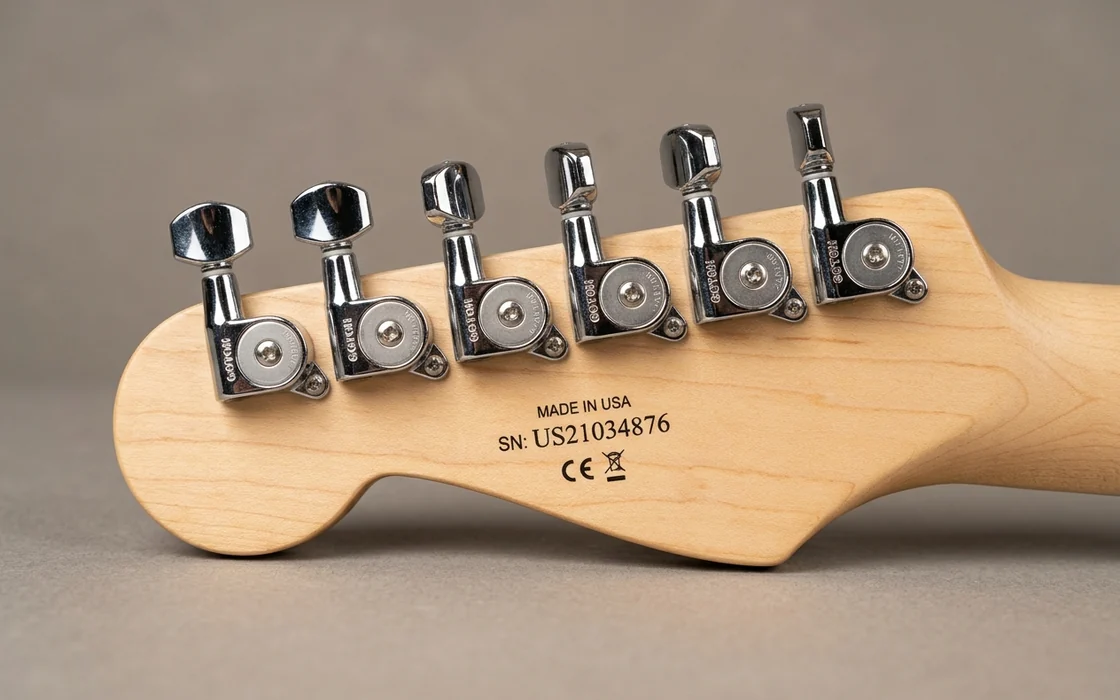
Rear close-up of a satin maple Fender-style headstock highlighting the printed US-prefix serial number below the tuners
Serial on rear headstock
Modern Fender guitars print the serial on the rear of the headstock; check the neck plate or bridge on vintage and reissue builds.
  1. Most modern Fender and Squier guitars print the serial on the back of the headstock below the tuners.
  2. Older bolt-on models and vintage reissues stamp it on the metal neck plate or bridge plate instead.
  3. Serial ranges can overlap by a year or more. The penciled or stamped neck-heel date is the final check.
  • Look for: Serial No. (letters + digits)
  • Skip: Patent numbers

Look for the serial and country together

Check the front and back of the headstock. If the serial is not there, look at the neck plate on the back of the body. Its location changed across runs, and some instruments carry other numbers on pickups or inside the control cavity. Save the serial as printed along with any Made in or Crafted in marking. A seller's photograph of the face of a Stratocaster headstock may show the logo but omit the information needed to choose a chart.

Match the prefix to the production location

A U.S. US16 prefix points to around 2016. A Mexican MX14 points to around 2014, while MN8 belongs to the Mexican 1990s style. Japanese JV serials cover an early-1980s window. Some U.S. and Japanese letter shapes overlap, so the rest of the markings and the instrument's construction matter. U.S. vintage reissue V serials can span years and need evidence beyond the prefix.

Fender treats serial dates as approximate. A neck may have been stamped or finished before final assembly, and a bolt-on neck can be replaced. That is one reason two otherwise similar instruments may have parts marked at different times.

Gather evidence for a used instrument

Ask for sharp photos of the complete headstock, neck joint, neck plate, bridge and any accompanying receipt or case paperwork. Use Fender's country guides to see if the serial and origin agree with those features. If you need a closer date, a repair technician can examine a neck-heel stamp where appropriate. A matching serial format can support the history you were given. Originality and authentication still depend on evidence from the instrument itself.

On US16012345, US identifies the relevant Fender series and 16 suggests around 2016. On MX14123456, the MX14 prefix points to the approximate 2014–2015 Mexican range. Compare the country marking and hardware with the appropriate Fender guide before carrying the date over to a different neck. For an older guitar advertised with a JV serial, ask where the number is stamped and photograph the entire plate or bridge. A loose replacement neck can add a second, legitimate date to the history. If a listing omits the location of the serial, ask for that image before paying for an originality claim.

A buyer comparing two instruments advertised as the same year should record where the number was found on each one. A bridge stamping and a headstock decal travel with different parts when a guitar is repaired. Ask whether the seller has pictures from before a neck or bridge replacement. An early receipt with the full serial can show how the guitar was described at the time of purchase, while later photos can show which hardware changed. If the only evidence is a number in a listing title, the prefix narrows the search for a model but gives little evidence about the specific instrument.
Fender U.S., Mexico and Japan prefix examples

The highlighted row is the range behind the result above. Ranges can overlap, so read it with the other clues.

Selected Fender and Squier prefixes

CodeMeaningDetail
US16Around 2016, United StatesTwo year digits after US
MX14Approximately 2014–2015, MexicoTwo year digits after MX
MN8Approximately 1998–1999, MexicoOne digit within the 1990s
JVApproximately 1982–1984, JapanUse the relevant Fender Japan guide

Fender neck swaps and overlapping prefixes

Numbers that date wrong on purpose, factory changes and serials worth a second look.

Neck heel and headstock disagree

A Fender neck heel stamp predates the year suggested by the serial on the neck plate.

Record both locations and dates. A neck can predate final assembly or have been replaced. Have a technician compare the neck, body and hardware before assigning one date to the whole guitar.

A blank manufacturer lookup

The official lookup returns no match for a Japanese instrument with a JV prefix.

Compare the full stamp, its location and the country marking with Fender's Japan guide. The lookup has incomplete coverage, so a missing result alone does not establish authenticity.

Compare Fender neck, body and serial evidence

Originality signs that matter more than the serial, and official places to confirm them.

Photograph the serial and country marking

Include the entire headstock and neck plate so the origin and mounting style can be compared.

Document any swapped parts

A replacement neck or plate can carry a serial from a different instrument. Ask for receipts or a description of changes.

Fender guitar and bass dating questions

Short answers first. Open a question for the detail.

How do I look up my Fender Stratocaster or Jazz Bass serial?
Read the headstock and neck plate, confirm the country marking, and enter the full serial. Compare the result with Fender's official records.
What if Fender's official lookup returns no result?
Check every character and use the country-specific Fender chart. An absent database result by itself does not establish authenticity.
Can I use this for a Squier guitar?
Yes, for supported Squier prefixes. Record the country and full prefix because the date rules vary by production location.
Why is the Fender date a range?
Serial decals, necks and bodies could be used across periods. A neck-heel stamp can help date the neck more closely.