Start with the length of the complete serial
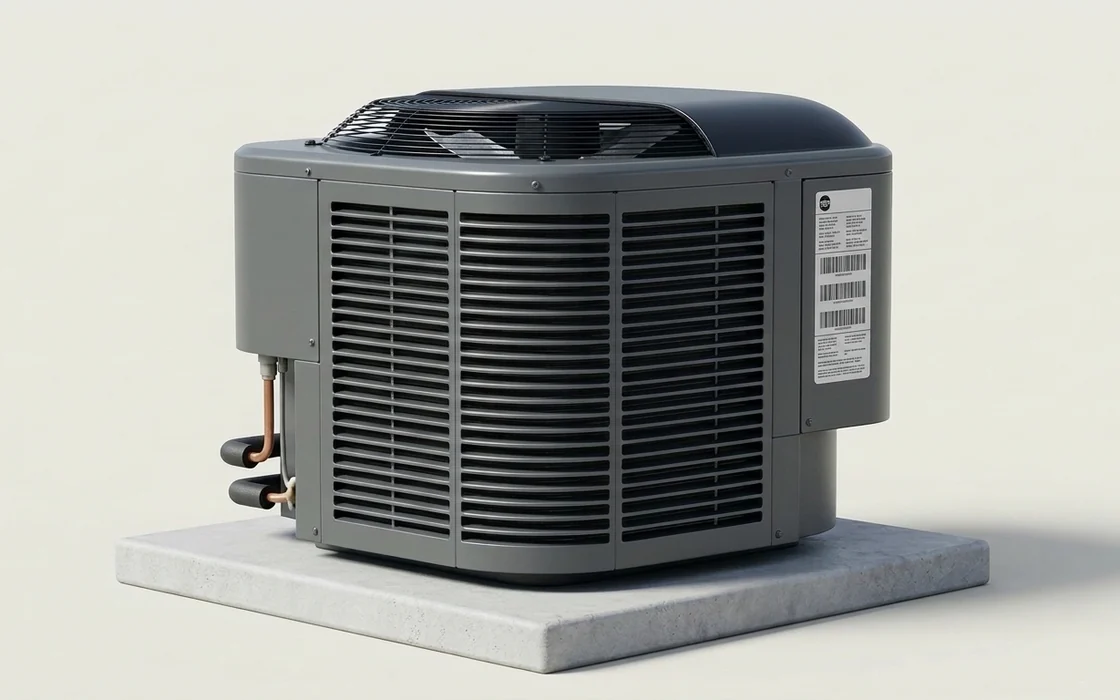
On an outdoor Trane unit, find the decal on the cabinet, often near the refrigerant or electrical connections. Check the indoor furnace or air handler separately. The label from a replacement motor, blower, or compressor can carry its own serial, which is useful for parts but can date from a later repair. Take a clear photo showing the header and both main equipment fields.
On the 10-character example 17103N6M4F, start with 17 for 2017 and 10 for week 10. On the nine-character 91531S41F, start with 9 for 2009 and 15 for week 15. If you leave out the final character of a later serial, you change the total length and risk applying the wrong rule. Compare every character of a rubbed or faded label with the copy on a service invoice.
Older Trane letter years
On the supported letter-year format, the first character identifies the year. In F23456789, F is 1991 and 23 gives the week. Letter years are assigned from a chart and do not advance in ordinary alphabetical order. References conflict for early T and U codes, so retain both possible years for those cases until a nameplate date or equipment documentation resolves the conflict.
Confirm the scope of a warranty lookup
Use the full equipment serial to check Trane's coverage, and save the warranty confirmation with the installation paperwork. Ask which component and which type of coverage the result applies to. A valid entry for an outdoor unit tells you little about coverage on an older indoor unit that was never part of the same installation.
On 10161KEDAA, the first pair is 10 for 2010 and the next is 16 for the production week. Compare that with an installation invoice from 2011. It is common for manufacture to precede installation, so look for the serial on the invoice before treating the dates as a mismatch. If the paperwork identifies only the outdoor cabinet, start a separate record for the indoor coil and check its label for the model number. A dealer may have changed the outdoor cabinet while keeping the original coil in service. Date each component and use the installation record that actually identifies it when asking about coverage.