Skip to content
SerialLookups

HVAC Serial Number Lookup

Use the serial on the unit's own nameplate. Choose the manufacturer before comparing the date with the installation history.

Spaces and dashes are ignored. For a star note, add * at the end.

Built week 40 of 2006 · 20 yrs 1 mo

Try a real example

Serial No. · Carrier / Bryant / PayneCarrier 10-character (WW YY + plant)
40Week
06Year
APlant letter
17330Sequence

Built week 40 of 2006 Digits 1–2 = week 40, digits 3–4 = 2006, A = plant code.

Age vs. typical service life20.1 yrs
013 yrs25 yrs
  • Warranty 10 yrs
  • Typical life 15–20 yrs
  • Today

Past a typical 10-yr parts warranty.

Older than the typical 15–20-yr furnace / AC / heat pump life.

Week
40
Year
2006
Plant code
A (no verified plant list)

Where to find the serial number

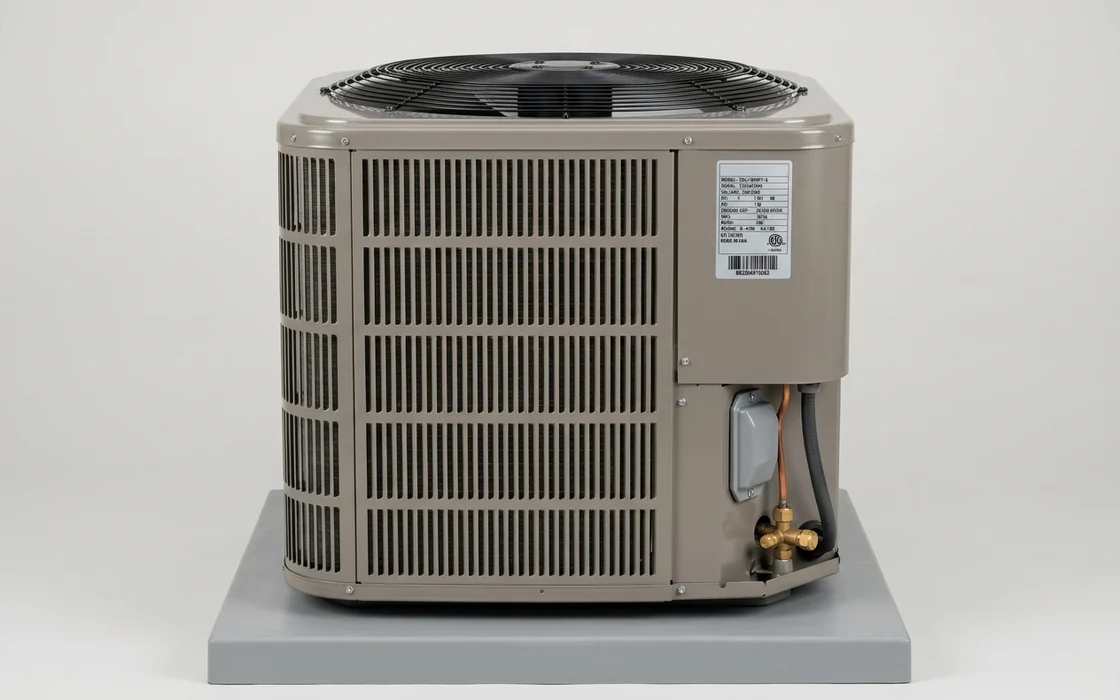
Data plate on the outdoor unit

Warm-gray outdoor central air condenser showing the rectangular metal data plate above the brass refrigerant valves
Data plate
Outdoor condensers carry their rating plate on a service panel near the refrigerant valves; check indoor air handlers separately.
  1. Walk around the condenser. The plate is usually on a side panel near the service valves or the electrical disconnect.
  2. Use the number after "Serial No." The model number is a separate line.
  3. Faded plate? Shine a phone flashlight at a low angle to lift the embossed characters.
  • Look for: Serial No. / S/N
  • Skip: Model No. / M/N

How HVAC brands order weeks, months and years

The highlighted row is the rule behind the result above. Match it to the plate on your unit.

Common HVAC date code orders

CodeMeaningDetail
Carrier WWYYWeek then year4006 reads as week 40 of 2006
Trane YYWWYear then week on many 10-character units1710 reads as week 10 of 2017
Lennox PPYYMPlant, year then month letter1606B reads as February 2006
Goodman YYMMYear then month0606 reads as June 2006

Mixed-age systems and overlapping HVAC codes

Rebranded cabinets, replaced coils and serial formats that changed mid-decade.

The same four digits fit two brands

An older note in the service folder starts with 1606, but there is no brand or model.

On a Lennox label it can be plant 16 and year 2006 with a month letter next. On a supported Carrier label it can start with week 16 of 2006. Check the cabinet before interpreting the remaining characters.

Two cabinets with different dates

The heat pump decodes to 2021 and the furnace to 2009.

Record both dates. Ask for the heat pump replacement invoice and confirm which indoor equipment was retained before describing the system as a 2021 installation.

Record the age of each system component

Refrigerant era, warranty length and where to confirm coverage with the manufacturer.

Date the indoor and outdoor units separately

A matched system can have two serials and different manufacture months. A partial replacement can leave years between them.

Pull the original work order

Compare the factory estimate with installation records, then confirm component-specific coverage with its manufacturer.

Identify the unit you are trying to date

Outside, find the equipment plate on a cabinet side, often near the refrigerant lines or electrical connection. Indoors, check the furnace or air handler's cabinet and its access-door label. If the plate is inside a panel that needs tools to open, ask the servicing technician to photograph it. The thermostat, filter size and compressor tag belong to different items. The date of a replacement compressor alone cannot date the entire air conditioner.

If you have a package unit, the large exterior label describes equipment in a single cabinet. With a split system, keep separate entries for the outdoor unit, furnace or air handler, and indoor coil when you can identify it. Save the model and serial in each entry, especially if the service history says part of the system was changed.

Compare codes only after selecting the brand

A 10-character Carrier and a 10-character Lennox serial can look alike at a glance. Carrier usually starts with a week. Lennox usually starts with a plant code and uses a letter later in the serial for the month. York uses a split year in one of its formats. Copy all characters and use the manufacturer's name from the plate to decide which reading applies.

Use age alongside the inspection

If you are buying a home, compare the dates with the seller's invoice or permit and note which component each document covers. Ask whether a repair quote includes the same coil, blower, and outdoor unit that you dated. A manufacture estimate helps identify a generation of equipment. Mechanical condition, parts availability and the matched-system requirements determine what to repair or replace.

For a house inspection, start a short equipment list at the outdoor unit and carry it indoors. For each cabinet, record the label location, model, serial and date result. A Carrier 4006A17330 yields week 40 of 2006 under the Carrier format, while Trane 17103N6M4F gives week 10 of 2017 under the year-first layout. On the same property, those dates could describe two units serving different zones. Identify which thermostat or service record belongs to each cabinet before combining them in a report. If the indoor coil has its own plate, record it independently. The visible furnace label describes the furnace.
Air conditioner and furnace age questions

Short answers first. Open a question for the detail.

Can I look up a furnace or AC by serial number?
Yes, for a supported format. Use the serial from its rating plate and select its maker to see the available date information.
How do I read an HVAC serial number?
Follow that brand's date positions. Carrier commonly puts the week before the year, while newer Trane equipment often uses the reverse order.
Can you tell installation age by serial number?
The serial can give a production date. A permit, installation invoice or dealer record is the better source for time in service.
How do I identify my HVAC system?
Record the model and serial from each cabinet. A thermostat badge or outdoor unit label cannot identify every component.