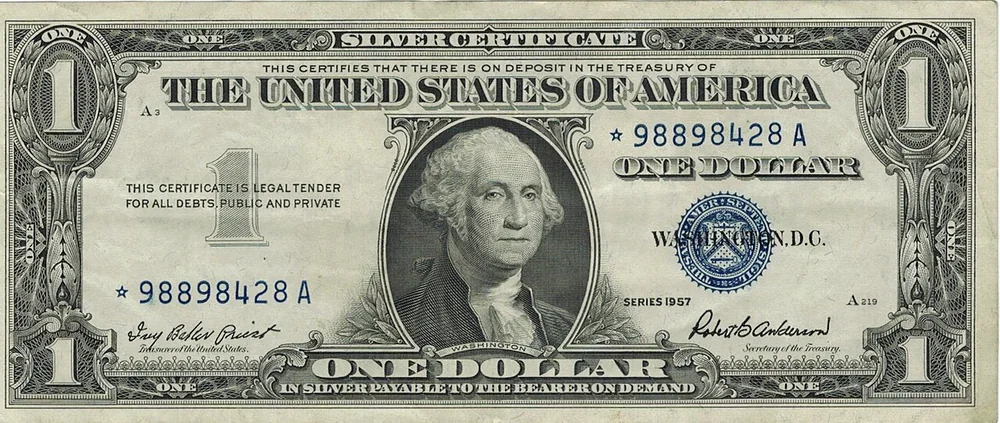
Read the title above the portrait
Look for the words Silver Certificate on the front, then note the denomination and the complete series. The suffix matters. 1957, 1957A, and 1957B are distinct series. A blue Treasury seal is a clue for many small-size certificates, and a brown seal with HAWAII overprints or a yellow seal identifies a wartime variety when the rest of the note agrees. Photograph both faces to capture the reverse design and any overprint.
Compare the right size and variety
A small-size 1928 one-dollar funnyback, an ordinary 1935D one-dollar note and a larger 1899 Black Eagle need separate comparisons. The 1935 family, for example, includes changes to the reverse and wartime issues. Some 1935G notes carry IN GOD WE TRUST and others do not. Before comparing prices, write down the exact series, seal, and variant. On some silver certificate replacements, the star precedes the digits. If yours has one, record its actual position in your notes and use the star option to flag the variety.
Treat the chart as a range for typical notes
Check for creases, paper loss, surface marks, and handling at the edges. A note that has been pressed flat can still show fold lines. Compare completed sales with the same grade and catalog variety, including the distinction between graded singles and multi-note lots. A higher denomination also needs its own comparison, even if its seal is the same color as a one-dollar bill.
A genuine silver certificate can still be spent at face value. The silver redemption program ended in 1968. Collector value depends on the paper in your hand and the demand for that particular issue.
On Q99998988A, enter all eight digits and choose the series printed on the bill before comparing values. If the note reads 1957, keep it separate from 1957A and 1957B when looking for exact comparisons. A 1935D example may require a reverse-design check as well. Photograph the full front and back in neutral light and note any staining that makes the seal color hard to judge. Keep printed replacement stars separate from handwritten markings. On the pictured 1957 note the star appears where a prefix would otherwise sit, so compare the serial format within the silver certificate issue.
For a 1935A wartime candidate, keep the front and back together while you check the overprint. Compare the note with a documented example of the same denomination first. A green-seal Federal Reserve note with the same denomination is a poor comparison even if the overall layout looks familiar. If the seller calls out a red letter, take a close-up and keep the full-note image too. The location and appearance of the mark matter, and a close-up alone makes it harder to see whether the base certificate matches the claim. Leave a note unaltered while you get a second opinion about ink, staining or repairs.